The earlier silicon photonics gate covered how, as AI clusters grow ever larger, copper struggles, so the industry switches to moving data with light. This piece picks up from there: it goes deeper on CPO, the key technique for bringing light right next to the chip, and along the way looks at what’s running hot in the optical-module market and Taiwan’s supply chain.
This is the extension of the optical-interconnect gate in The AI Hardware Supply Chain, End to End, focused on CPO, 800G/1.6T optical modules, and the “optical-communications stocks” so often treated as a market theme. Let’s be clear up front: this piece only describes industry roles and public information, and does not constitute any investment advice.
What Is CPO? A One-Sentence Recap
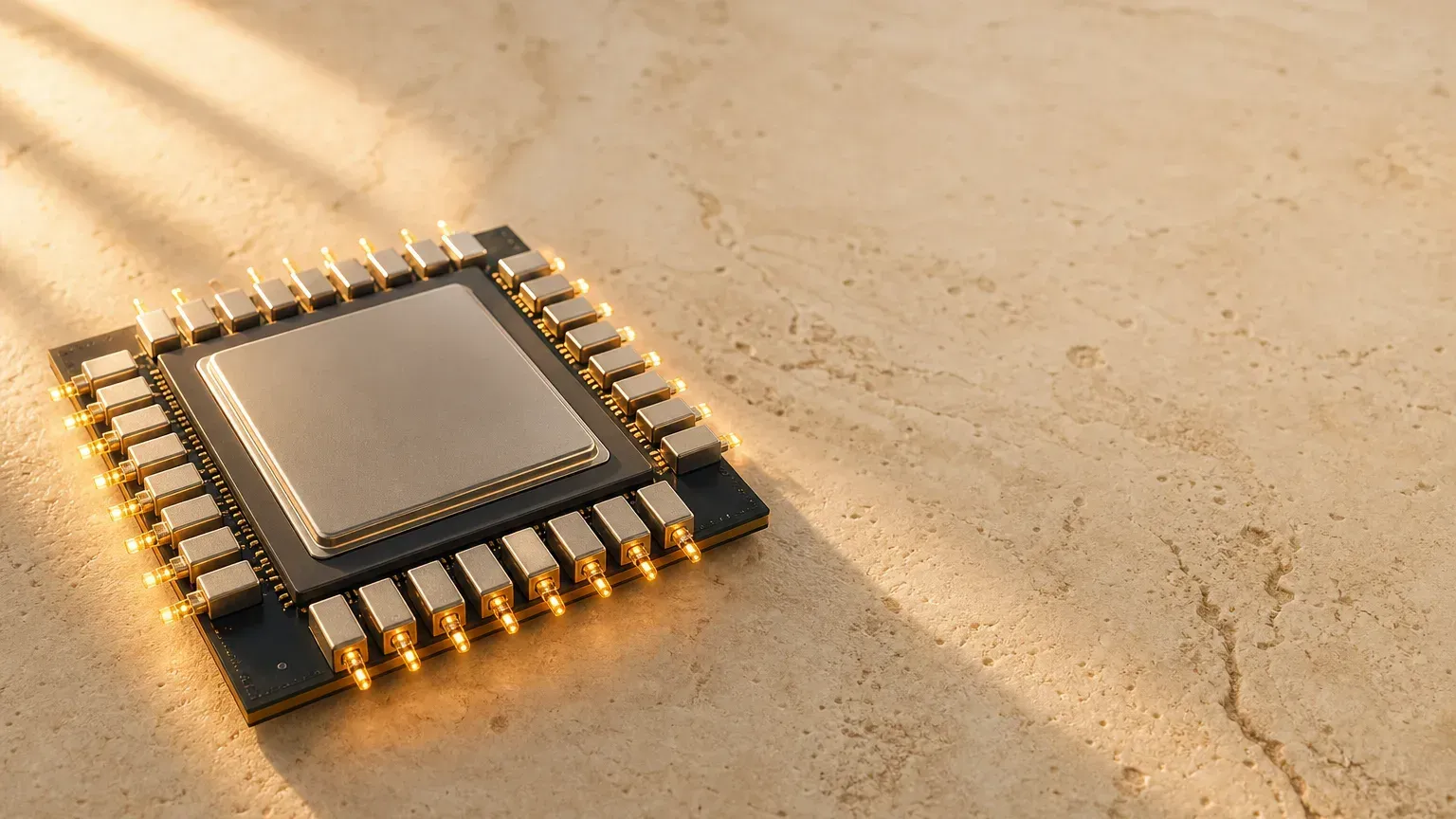
CPO’s full name is co-packaged optics. What it does is package the optical engine that handles electrical-to-optical conversion directly beside the switch chip or AI accelerator.
Why do it this way? Because traditionally the electrical signal has to travel a stretch across the circuit board before reaching an external optical module to be converted to light, and at high speed that stretch is both power-hungry and distorting. Moving the optical engine right next to the chip effectively cuts that stretch short, saving power and packing in more bandwidth density. By NVIDIA’s figures, this approach claims up to roughly a 3.5x efficiency gain over traditional external modules. In one line: CPO moves the point of optical conversion as close to the chip as possible.
CPO vs. Pluggable Optical Modules: How to Choose
To understand CPO’s value, you first have to know its challenger: the pluggable optical module.
A pluggable module is like a plug-in card — it can be hot-swapped when it fails, can mix different speeds and distances, and comes from many suppliers, so it’s highly flexible and is the current mainstream. CPO packages the optical engine right next to the chip, with better power efficiency and density, but it sacrifices flexibility: if the optical engine fails, you may have to replace the whole unit or even the whole card. So the two have their trade-offs, and 2026 looks more like coexistence: CPO cuts first into high-end scenarios that care most about power, while pluggable modules keep guarding most of the demand.
The industry is also shoring up CPO’s weak spots. For example, making CPO’s external laser a field-replaceable module (the OIF’s ELSFP spec) is precisely about making CPO less disadvantaged on serviceability. In other words, CPO will spread while patching its shortcomings, and won’t replace pluggables in one step in the near term.
Core-Data Snapshot
The numbers below help you grasp the heat in this optical-communications space. Market and penetration figures are mostly estimates from research firms.
| Topic | Data | Time / Nature |
|---|---|---|
| Share of 800G+ optical module shipments | About 19.5% in 2024 → over 60% in 2026 | TrendForce estimate |
| AI optical-transceiver market | About $16.5B in 2025 → about $26B in 2026 (up over 50% YoY) | TrendForce estimate |
| CPO penetration in AI optical-communications modules | About 0.5% in 2026 → about 35% in 2030 | TrendForce estimate |
| NVIDIA CPO switches | Quantum-X / Spectrum-X Photonics, phased rollout within 2026 | NVIDIA |
| TSMC silicon-photonics platform COUPE | Targeting mass production in 2026 | TSMC 2025 annual report |
Where CPO Stands in 2026
On the product front, 2026 is the year CPO moves from the lab to the doorstep of commercial use.
NVIDIA has put two silicon-photonics switches, Quantum-X and Spectrum-X Photonics, into its product line, with the official timelines both falling within a phased 2026 rollout (the framing may still be adjusted). Broadcom has launched its Tomahawk 6-Davisson CPO switch built on TSMC’s platform (single-unit switch capacity of 102.4 Tbps), currently shipping samples to early customers. TSMC’s silicon-photonics integration platform COUPE targets mass production in 2026, while Samsung sets its pace at a full CPO solution in 2029.
But don’t think of it as “next year it all switches to CPO.” Research firms estimate CPO’s penetration in AI optical-communications modules at only about 0.5% in 2026, likely not climbing to the low thirties percent until 2030. What’s really ramping in 2026 is the demand for 800G-to-1.6T optical modules discussed in the next section.
Why the Optical-Module Market Is on Fire
CPO is still ramping, but the whole optical-communications market has already heated up first, driven by AI’s appetite for bandwidth.
Optical modules’ speed generations are pushing from 800G toward 1.6T. Research firms estimate that 800G-plus optical modules’ share of global shipments rises from about 19.5% in 2024 to over 60% in 2026, while the AI-specific optical-transceiver market grows from about $16.5 billion in 2025 to about $26 billion in 2026 — up more than 50% in a year. The bottlenecks for this wave of demand fall on laser chips (EML, CW lasers), optical alignment, thermal management, and power — precisely the key points where the supply chain stakes out its positions.
Taiwan’s Optical-Communications Supply Chain: What It Does
Optical communications and silicon photonics have been a hot theme in Taiwan’s stock market in recent years. Let’s be clear about the stance first: the following only describes public supply-chain roles, and does not compile beneficiary stocks, price targets, or buy/sell recommendations.
Taiwanese firms’ opportunities are mainly concentrated in a few links: laser chips (such as EML and CW lasers, the core components that generate the optical signal), passive optical components, optical-transceiver assembly and testing, and silicon-photonics foundry work. The roles named in industry coverage roughly include: Landmark Optoelectronics making EML laser chips; EZconn and Luxnet positioning in lasers and optical modules; Browave making passive optical components and also appearing on NVIDIA’s silicon-photonics partner roster; and PCL making high-density fiber arrays and CPO co-packaging. Others such as Applied Optoelectronics, LandMark, and Delta Electronics often show up in broader discussions of the optical-module and connectivity supply chain.
Two reminders. First, being named is a public supply-chain role or market discussion — it does not mean a company has already won orders from NVIDIA or a top-tier cloud operator. Second, the reason optical communications and silicon photonics became a market focus is that expectations around 800G/1.6T and CPO commercialization are drawing capital, but that doesn’t mean any individual company is sure to benefit; this piece makes no stock picks or investment recommendations.
Opportunities and Risks
For Taiwanese firms, 2026 to 2027 is the critical window for staking out positions in the 1.6T and CPO supply chain. Whether they can squeeze into top-tier customers’ design-in (being designed into the product and passing certification) will heavily shape later market share.
The risk lives in the same place. Technology-transition periods commonly bring component shortages, optical-alignment yield, thermal, and power challenges; and pluggable, LPO (linear pluggable optics), and CPO will coexist as multiple routes for a while, so betting on the wrong route or failing customer certification are very real risks. One signal worth remembering: in 2026 NVIDIA separately invested in optical-component and chip makers including Lumentum, Coherent, and Marvell (about $2 billion each), tying the key supply of optical interconnect more tightly to itself — which also shows the strategic weight of this chain.
Key Takeaways for This Gate
After going through CPO and optical communications, remember three things first.
CPO moves the optical engine right next to the chip, saving power and lifting bandwidth density, but it’s less serviceable than pluggable modules; in 2026 its penetration is still very low and the two coexist. What’s really ramping is the demand for 800G-to-1.6T optical modules, with the AI optical-transceiver market growing more than 50% in a year. Taiwan holds positions in laser chips, passive components, module assembly/testing, and silicon-photonics foundry work, which is also why optical communications and silicon photonics became a hot theme in Taiwan’s stock market — but a hot theme doesn’t equal a stock recommendation.
To review the basics of moving data with light, look back at What Is Silicon Photonics; to learn about the compute and power these optical links have to feed, see AI Data Centers and Power; to see all eight gates of the chain, head back to the supply-chain overview.