
AI giants rarely admit publicly that they’re behind, and even more rarely does a founder admit it personally. That’s why the leaked memo from April 2026 dropped a sizable stone into the industry’s pond.
According to tech outlet The Information, Google co-founder Sergey Brin sent an internal memo to DeepMind’s engineers admitting that Gemini was trailing Anthropic’s Claude in agentic coding (letting AI write and revise code on its own), and telling everyone to catch up urgently. To get to know the people steering Google’s AI, read Who runs Google’s AI; to get acquainted with the whole company first, read What kind of company is Google.
Let’s be clear about its nature first: this memo is a leaked document, relayed by the media — not an official statement from Google. Everywhere below that quotes the memo’s content, keep that premise in mind.
To set the tone in one line: this is a rare instance of self-applied pressure laid out in the open. But Google’s official line to the public is actually one of “enthusiastic adoption,” and you have to listen to both voices together to hear the whole picture.
What the memo said
According to The Information’s April 2026 report (by reporter Erin Woo), Brin wrote a line in the memo that multiple outlets have consistently quoted: “To win the final sprint, we must urgently close the gap on agentic execution and make our models the primary developer.”
The weight of this line lies in the fact that it came from a semi-retired co-founder, and that it was addressed to DeepMind’s entire body of engineers and researchers. According to reports, the memo also required all Gemini engineers to switch to Google’s own agent tools for complex, multi-step tasks.
Admitting you’re behind isn’t easy for a company, and it’s even harder for someone who once took Google from a garage to a trillion-dollar valuation. That candor is itself a signal.
The elite team: Google’s counterpunch
Admitting it wasn’t enough on its own — the memo simultaneously ignited an internal mobilization.
According to reports, Brin ordered the formation of an elite team within DeepMind (the industry calls it a strike team), dedicated specifically to catching up on coding ability. Leading it is senior researcher Sebastian Borgeaud, who once led the pre-training of the Gemini series and carries deep academic influence. Even more notable is the level of involvement: DeepMind’s CTO, Koray Kavukcuoglu, stepped in directly, and Brin himself participated personally. The fact that something could command attention at this level shows how seriously Google took it.
The direct reason behind this team, according to reports, was that DeepMind’s internal assessment concluded Anthropic’s Claude Code was performing better at coding than Gemini at the time. When your own people think the rival is stronger, that’s a very hard trigger inside a big company.
The AI consumption leaderboard and mandatory internal use
Some of the details of the catch-up effort are quite interesting.
According to reports, Google internally tracks how much a coding tool code-named “Jetski” gets used, then ranks teams by that, producing an internal “AI consumption leaderboard” — a mechanism similar to how Meta ranks by token consumption. Add to that the memo’s requirement that engineers switch to internal agent tools for complex tasks, and the intent of the whole combination is clear: use your own products, and push your own products until they’re good enough. In Silicon Valley this is called dogfooding — eating your own dog food, forcing the team to become its most demanding user first.
A contradiction: officially it’s “enthusiastic adoption”
This is where the most subtle part of the whole story appears.
The memo reveals anxiety, yet Google’s public line is optimistic. Responding to The Information’s report, a Google spokesperson said the company was seeing “enthusiastic adoption” of the tools, and that the relevant tools were “accelerating development of our models and AI tools.” Earlier, CFO Anat Ashkenazi had formally stated on the February 2026 earnings call that roughly half of Google’s new code was already being written by coding agents and then handed off to its own engineers for review. By contrast, Anthropic claims that nearly all of its own code is generated with AI assistance.
Admitting it’s behind internally while emphasizing progress externally — both of these voices are true, and both hold up. The trick to reading this is not to believe only one side. Falling behind and making progress can coexist: you might be trailing a rival on one dimension while your overall adoption rate is genuinely surging.
This isn’t the first memo he’s sent
There’s a common confusion to avoid. People online often tie the line “60 hours a week is the productivity sweet spot” to this coding memo, but they are in fact two different documents.
That 60-hours line came from a separate memo Brin sent in early 2025, first reported by The New York Times. What he wrote then was that “competition has accelerated immensely and the final race to AGI is afoot,” with the main thrust being a call for employees to step it up. This April 2026 memo, by contrast, is clearly focused on falling behind on agentic coding. Keeping the two separate is how you avoid scrambling the timeline.
From the early-2025 “step it up” to 2026’s “form an elite team,” you can actually trace a line: ever since Brin returned to Google, that sense of urgency has been ratcheting up step by step.
I/O 2026: the official response
A month after the memo leaked, Google delivered its answer at its May 2026 developer conference, I/O.
It unveiled a rebuilt agentic coding platform, Antigravity 2.0, demonstrating on stage how it used more than ninety parallel sub-agents to build out an operating-system framework in about half a day; at the same time it launched a new generation of flagship Gemini models, headlining stronger coding and agentic capabilities. Interestingly, Antigravity chose an open route, claiming compatibility with Claude Code and OpenAI’s tools rather than locking down the ecosystem.
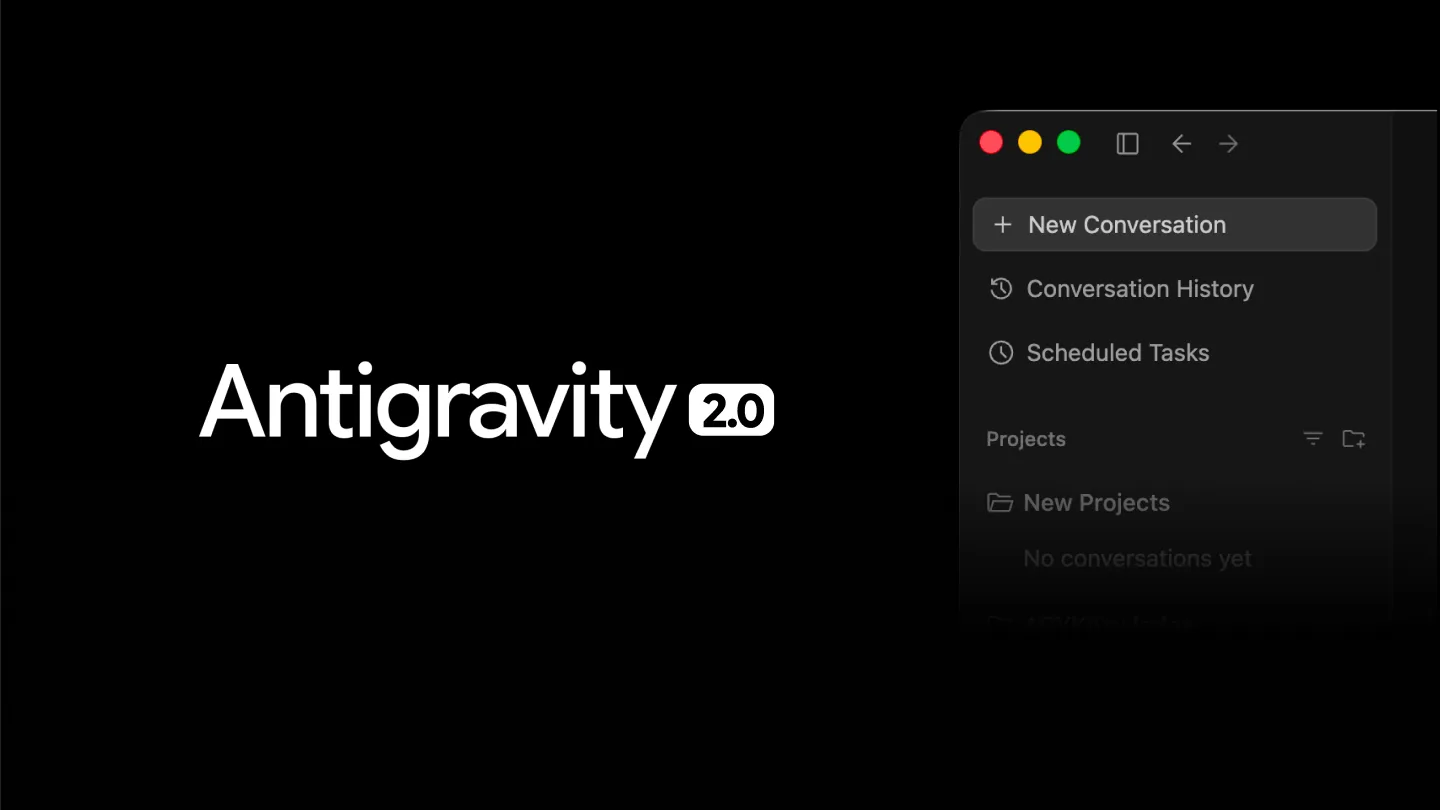
This round of response was fairly quick. Only a month separated the anxiety of the internal memo from the product response at a public conference, a sign that Google had made catching up on coding a high priority.
What’s Still Unclear
Plenty of this story rests on “according to reports,” so let’s flag that honestly:
- The full text of the memo: The Information’s original report is behind a paywall, and the quotes circulating now are mostly second-hand accounts, so the full content can’t be verified directly.
- How the leaderboard is ranked: whether that internal “AI consumption leaderboard” ranks by token volume, number of tasks, or some other metric — existing reports only vaguely call it a “usage leaderboard.”
- “Engineers allowed to use Claude”: some media reported that on the eve of I/O, some DeepMind engineers were permitted to use Claude for their own work, but this is currently a single source — take it as reference, not as a verdict.
- The exact gap between Gemini and Claude: various benchmark figures are floating around, but the framings and time points don’t line up, so it’s best not to fixate on any precise percentage.
Penna’s take
Pull back from this memo and what’s truly valuable about it is the rare glimpse it gives us into a giant’s inner rhythm.
Google holds the widest distribution channels, has its own custom chips, and has DeepMind’s research foundation — by rights it shouldn’t fear anyone. Yet Brin still hit the alarm, because coding is too pivotal: when AI starts writing large amounts of code in place of engineers, whoever’s model writes better can improve its own next generation faster. This is a self-accelerating race, and one step behind can mean being pulled further and further back. Admitting it’s behind and mobilizing immediately is, conversely, evidence that this company is still quite clear-headed.
Further reading: Who runs Google’s AI, Why Google invests in its rival Anthropic. When Google is chasing Claude on one hand while pouring money into Claude’s parent company Anthropic on the other, the competition becomes all the more intriguing.