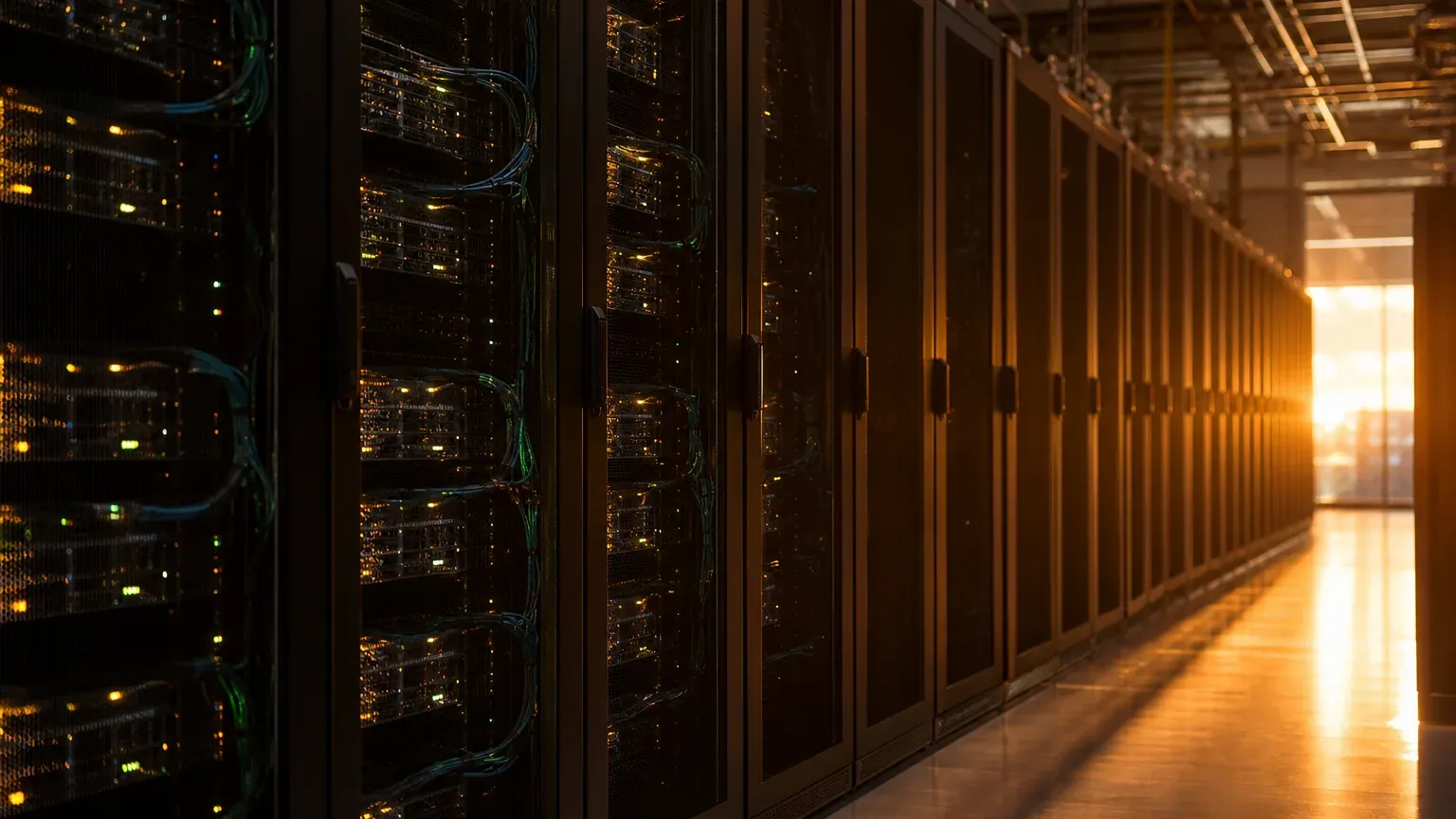
Many people assume the competition between AI companies is only about “whose model is smarter.” But for frontier models, there’s another equally critical race hidden in the background: who can secure enough compute. Anthropic doesn’t build its own chips, and how it fights this battle is a key to understanding how far it can go.
This piece walks through Anthropic’s compute strategy: where its compute comes from, why it uses three clouds at once, how many long-term contracts it’s carrying, and the supply-chain bottleneck that no AI company can escape. If you want to get to know the company first, you can start with what kind of company Anthropic is.
To set the tone in one sentence: Anthropic “spreads” its compute risk across three clouds, at the cost of “binding” itself into several sky-high long-term contracts.
Three Clouds, Three Chips
Anthropic’s most distinctive compute strategy is deliberately not putting all its eggs in one basket. It relies on three compute tracks at once:
- Amazon AWS: using AWS’s in-house Trainium chips. AWS is Anthropic’s earliest and deepest compute partner and its largest investor.
- Google Cloud: using Google’s TPUs (Tensor Processing Units). Google is also an early investor.
- Microsoft Azure: accessing NVIDIA GPU compute through Azure.
Add in the Colossus supercomputer rented from SpaceX, and Anthropic effectively spans nearly all of the mainstream AI compute sources on the market at once. The upside of this is spreading risk: not being squeezed by any single supplier on price or capacity, and being able to allocate the most cost-effective option across different chips. The cost is complexity, since it has to maintain several enormous long-term contracts at the same time.
Sky-High Long-Term Contracts: How Big the Compute Commitments Are
The scale of these compute partnerships has reached a jaw-dropping level:
| Partner | Compute commitment |
|---|---|
| Amazon AWS | More than $100 billion in technology spending over the next decade; AWS provides up to 5GW of compute |
| Google/Broadcom | Gigawatt-scale TPU capacity, coming online in stages starting in 2027 |
| Microsoft Azure | Purchasing roughly $30 billion in compute, up to 1GW of capacity |
| SpaceX | Renting GPU capacity on the Colossus supercomputer |
Add it all up, and the compute commitments Anthropic has locked in far exceed its current revenue scale. This is the flip side of a high valuation: the market is willing to put a near-trillion-dollar price tag on it on the premise that this compute can ultimately be converted into enough revenue; should growth slow, these long-term contracts would turn from “fuel for growth” into a heavy fixed cost. This link to valuation is laid out in Anthropic’s valuation and IPO.
It’s worth flagging that the figures here are a bit messy: for that Google/Broadcom TPU partnership, the April 2026 announcement used “multiple gigawatts,” Broadcom’s filings and several media outlets put it at about 3.5GW, and by the May Series H official announcement it was written as 5GW. The figures across sources aren’t consistent, so this piece uniformly describes it as “gigawatt-scale” rather than locking in a single number.
The Supply Chain It Can’t Escape
Anthropic appears to have plenty of choices in whose cloud and whose chips it uses, but trace upstream and it all converges on the same place in the end.
Whether it’s AWS’s Trainium, Google’s TPU, or NVIDIA’s GPU, these advanced chips are almost all fabricated on TSMC’s advanced processes (N3/N2 class), then go through CoWoS (advanced packaging) to seal the compute die and memory together. In other words, even though Anthropic has spread out its cloud suppliers, in the end it still shares the single most critical and most congested supply chain with the entire AI industry.
Memory is the newer bottleneck. In its Series H announcement, Anthropic listed three major memory makers — Micron, Samsung, and SK hynix — as strategic infrastructure partners, and that move itself reveals that the supply of HBM (high-bandwidth memory) has become a scarce resource it must lock in ahead of time as it scales. For how the whole chain works, see the AI hardware supply chain end to end.
Export Controls and Geopolitical Exposure
The compute thread also pulls on a geopolitical fuse.
Anthropic’s compute sources are entirely tethered to US export-control policy. On one hand, it has already stopped serving most companies majority-owned or controlled by Chinese entities, with its business directly bound by US policy toward China; on the other, when advanced chips like NVIDIA’s come under export controls, supply prioritization tilts toward the US homeland and its allies, which also indirectly affects how much compute Anthropic can get, how fast, and at what price.
There’s another easily overlooked variable: electricity. The total compute capacity Anthropic has locked in has already reached the scale of 10GW and above, and behind that lies enormous power and data-center demand. At this moment of broad expansion across the AI industry, whether it can secure enough power and facilities in time has, just like chip capacity, become a real bottleneck on the pace of expansion.
Penchan’s Take
Anthropic’s compute strategy is a carefully calculated gamble.
It chose not to develop its own chips, concentrating resources on models and products, and then used a multi-cloud, multi-chip approach to spread supply risk — which makes strategic sense. But this choice also hands its lifeline to others: the price and capacity of compute, and even the direction of geopolitical winds, aren’t entirely within its control. More subtly, its largest compute partners are often its largest investors too, and this dual relationship of “financier and supplier” means each partnership holds both a backer and a dependency. For how to read this relationship, see Anthropic’s investors and partners.
For anyone trying to understand this company, compute isn’t just a line of cost — it’s a throughline that simultaneously connects valuation, competitiveness, and geopolitical risk. Watching how its compute footprint shifts often reveals more about a company’s long-term staying power than watching any single model’s benchmark scores.
Further reading: what kind of company Anthropic is, the AI hardware supply chain end to end, Anthropic’s investors and partners.