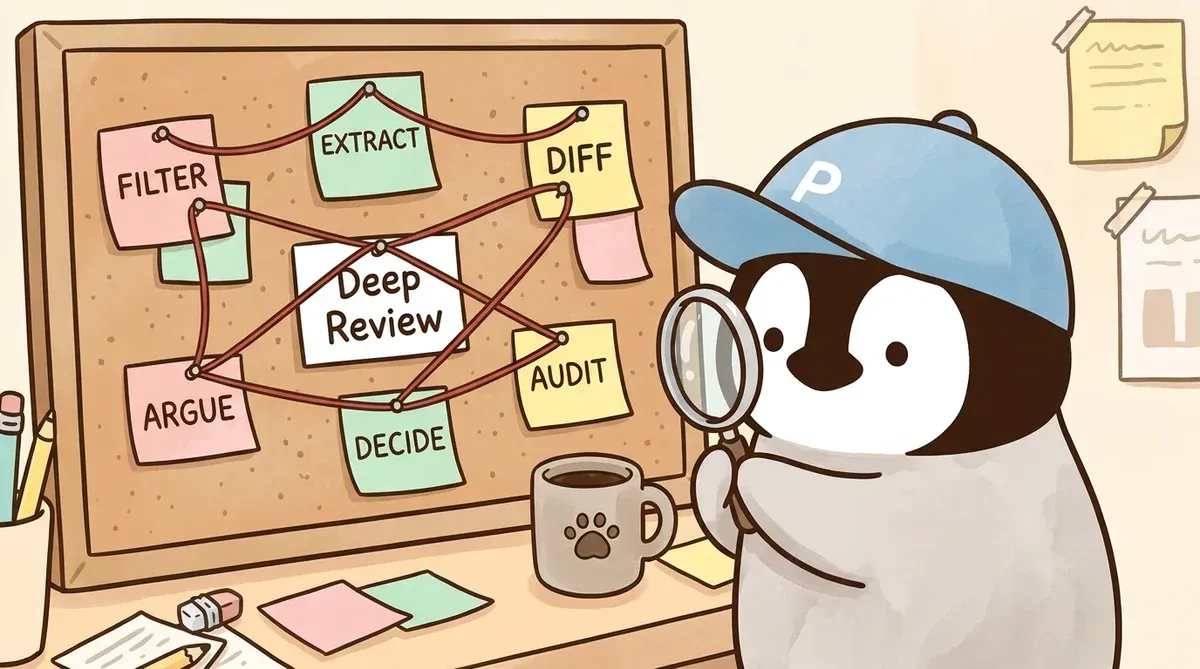
You read an excellent technical article, get excited, decide the whole approach should be adopted, then three days later you completely forget it. Or you copy a bunch of ideas into your system, only to realize a month later that you never needed them. Many people have lived this plot.
Where the Problem Comes From
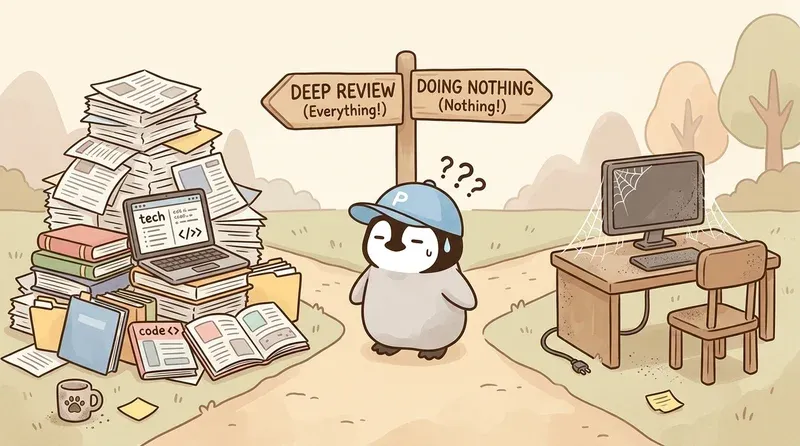
When reading articles, it is easy to get pulled along by a few things:
- Reputation: If a famous expert wrote it, must it be right?
- Novelty: New methods always sound more powerful
- Action impulse: After reading, you feel like you “should do something”
The root problem is that readers skip analysis. Whether the article itself is well written is secondary. Between “finished reading” and “implementation,” one step is missing: thinking it through.
But thinking carefully takes time and energy. Humans usually do not have enough patience to lay out every argument and inspect it.
AI does.
What Deep Review Is
Deep Review is a research methodology for AI agents. It is a structured prompt designed specifically to answer one question: “Should we adopt the suggestions in this article?”
Its core job is analysis. Summarizing an article is something any AI can do:
- Do I actually have the problem this article is solving?
- Are its suggestions supported by evidence, or are they just opinions?
- Compared with the current system, what is different?
- What are the adoption cost and risk?
- If the change turns out badly, can we roll it back?
After the process finishes, every suggestion gets a clear verdict: adopt, experiment, reject, or needs discussion.
Not intuition. Process.
Six Phases
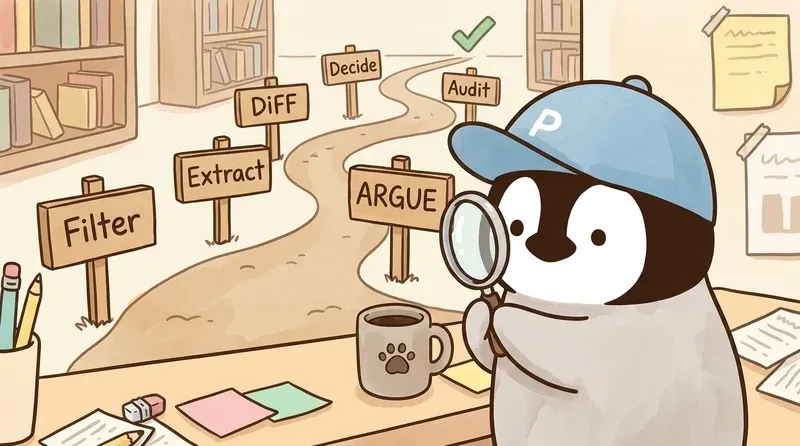
Phase 0: Filter
The most important first step: does this problem exist in your own system?
Most articles solve problems that do not exist in the reader’s own system. If the answer to the first question is “no,” the entire analysis ends immediately. No wasted time, no wasted tokens.
“Change nothing” is a completely valid result.
Phase 1: Extract
Break the article into independent claims, then label the evidence type for each claim:
| Type | Example |
|---|---|
| Experimental data | ”We tested 500 runs and latency dropped 40%“ |
| Case study | ”The team’s productivity improved after using it” |
| Logical reasoning | ”Because A, B should hold” |
| Pure opinion | ”This is better” |
This step only extracts. It does not judge. First, faithfully present what the author said.
It also asks a subtle question: If this article were published anonymously, would you still find it equally convincing? This is there to fight authority bias. Sometimes we are persuaded not by the argument, but simply because the author is famous.
Phase 2: Compare
Compare every claim against the current system state, and it must cite specific files and line numbers.
Vague wording like “the system seems to have something similar” is not accepted. Either point to config.yaml:42, or admit it has not been found yet.
Phase 3: Debate
For every claim, list both sides:
- For: the article’s evidence + concrete benefits for your own context
- Against: implementation cost, conflicts with the current system, situations the author did not consider
- Missing: information still needed before making the decision
It also evaluates impact across reliability, maintainability, operability, and complexity, plus one often-ignored question: If we regret adopting this, how expensive is rollback?
Phase 4: Decide
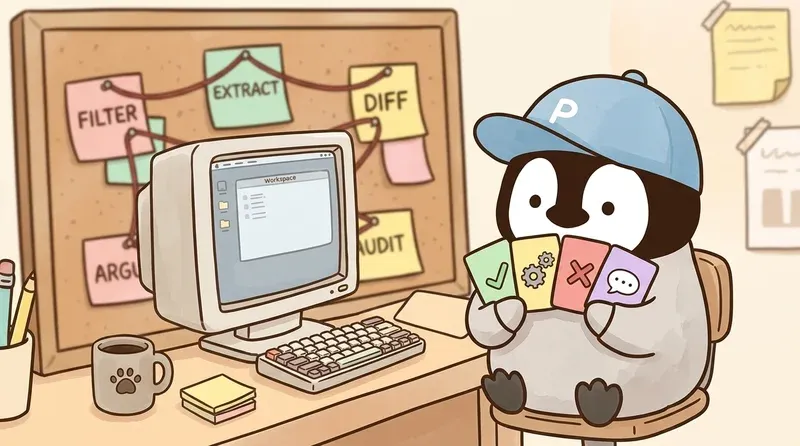
Each claim gets one decision card with a consistent format:
- Claim: what the claim says
- Decision: adopt / experiment / reject / needs discussion
- Reasons: the top 2-3 reasons
- Concrete change: which part of which file would change
- Expected consequences: expected positive and negative effects
The answer is not only “good” or “bad.” Sometimes it is “try this in a small experiment first.” Sometimes it is “good idea, but not useful here.”
Phase 5: Audit
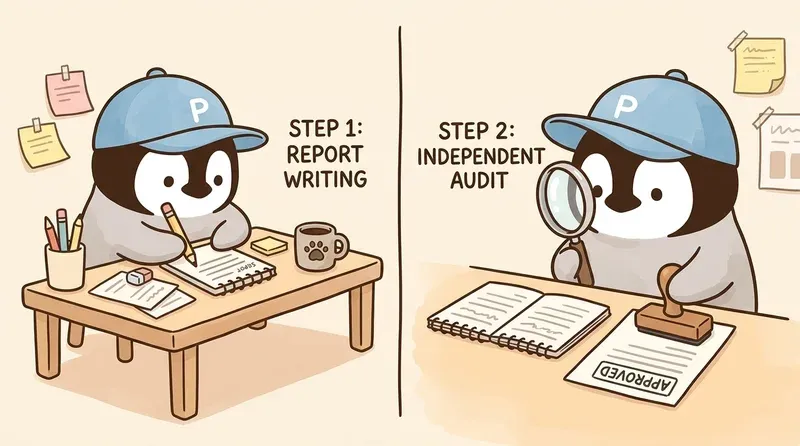
The final step is also the most important design choice: the audit must be performed by an independent subagent.
Why? When AI checks its own output in the same conversation, it will almost always say, “Looks fine.” Research shows this kind of self-checking has nearly zero discriminative power.
The independent subagent checks several common failure modes:
- Every claim was adopted, or every claim was rejected, which shows no discrimination
- The comparison table has no concrete file paths, only vague claims
- All objections are just “needs more data,” avoiding judgment
- Supporting arguments merely restate the article without connecting to the local context
It also asks a harsh question: If we skipped the whole analysis and made the decision by gut in 30 seconds, would the conclusion be the same? If yes, the analysis did not add value.
The Point Is Learning, Not Reviewing Sources
Someone might ask: is this a way to “audit” articles?
No. Deep Review’s core attitude is learning. The goal is not copying, and it is not criticism either.
It answers this question: “What in this article is useful for the user’s system?” Deciding whether the article is “right” or “wrong” is never the point.
Phase 5 audits the quality of the analysis process, not the article itself. When evaluating resources with a learning mindset, a lightweight red-flag check is enough.
How to Start
The simplest path:
- Put
deep-review.mdin your project directory or~/.claude/ - Type
deep-reviewin Claude Code and paste the article - Wait for it to finish all six phases and return the conclusion
That’s it. One file. Nothing to install.
It is also fine if you are not using Claude Code. deep-review.md is just a structured prompt, so you can use it in Cursor, Windsurf, or any AI tool that can read markdown.
Why I Built This
People who run long-term AI agent systems read a lot of technical articles and other people’s practices every day. Some are genuinely good. Some sound good but do not fit their own setup.
The problem is that there is not enough time or energy to analyze every article carefully. Gut judgment is also unreliable: sometimes too optimistic, sometimes completely dismissive.
So Deep Review exists: turning “intuition” into “process.”
Not every article needs this full analysis. Simple tips can just be read and moved on from. But when an article might change your system architecture or workflow, spending a few minutes on Deep Review can save hours of mistakes later.
Research Behind It
The design is grounded in existing work:
- CheckEval: why checklists work better than open-ended scoring
- LLM-as-Judge research: known biases when AI acts as judge
- Multi-agent debate research: why AI “roleplay debate” often backfires
- Heilmeier Catechism: DARPA’s proposal evaluation method
- Architecture Decision Records: the standard engineering-team format for recording decisions
Further Reading
- Multi-Agent Collaboration Guide
- Multi-Agent Development Workflow
- When 4 AI Agents Debate How to Manage Their Own Memory
- Complete OpenClaw Tutorial
Deep Review is open source under the MIT license.
GitHub: p3nchan/deep-review
Penchan’s Take
This skill is something I wrote and use every day. The most common use case is reading a technical article that sounds powerful, dropping it into Deep Review, and only then deciding whether to change the system. About 80% of articles end at Phase 0 because my own system simply does not have the problem. Of the remaining 20%, roughly half land on “needs discussion” or “reject” in Phase 4. The percentage that truly reaches “adopt” is much lower than expected, and that is exactly the value: turning excitement into an evidence-based decision.