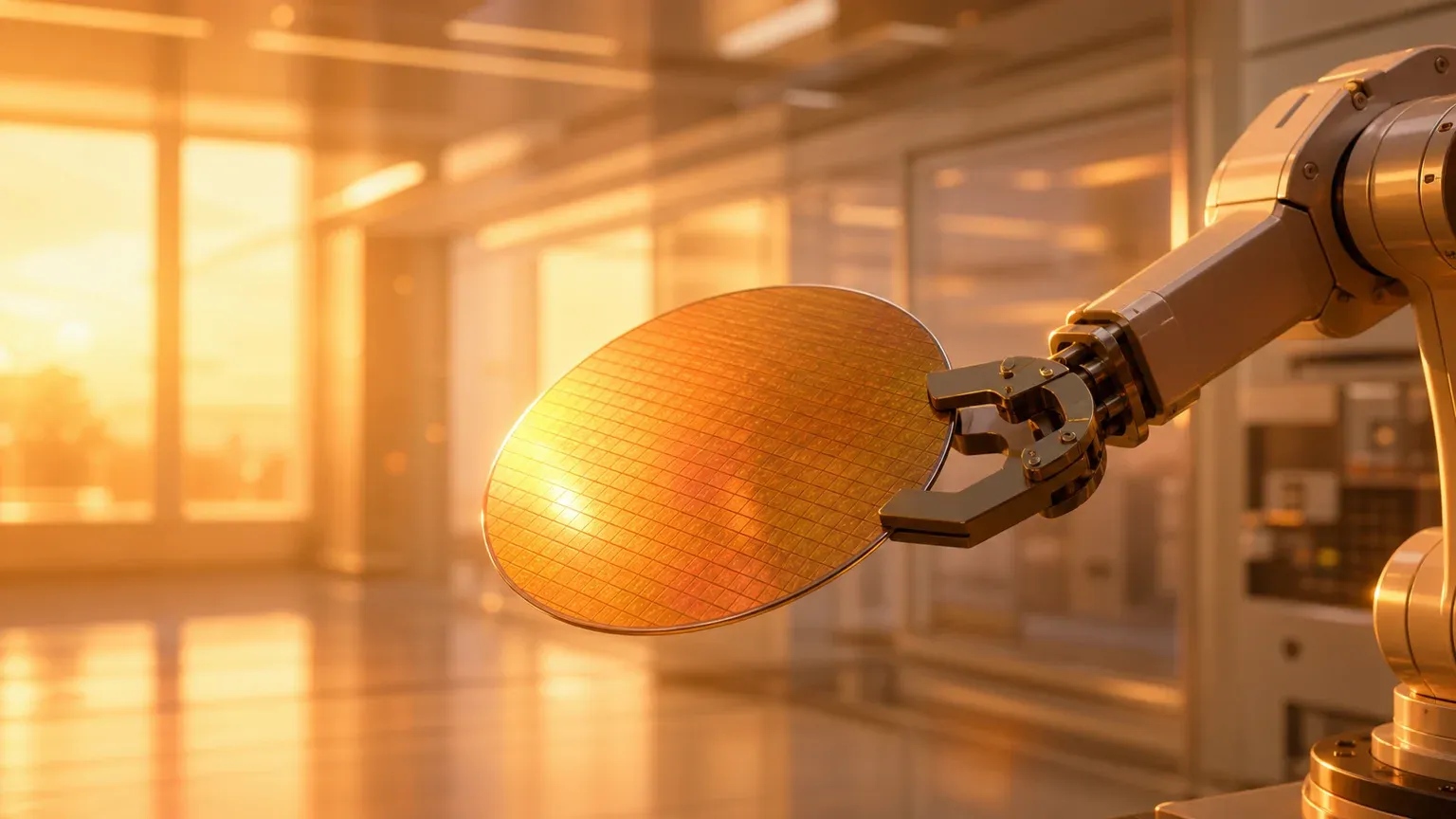
A big AI company’s deepest anxiety is often not that its models aren’t strong enough, but that it can’t get enough chips. SpaceX is no exception, and its reported solution is very “Musk”: then make them yourself.
Media reports say SpaceX is pushing an in-house chip plan codenamed TeraFab, intending to make its own GPUs for AI training. This piece covers why it would do this, who it’s measured against, and why the ambition is far from low-risk today. To get to know SpaceX and its AI map first, see What kind of company is SpaceX.
First, be clear: TeraFab is still a plan
Let’s flag one premise up front: as of the first half of 2026, TeraFab is a “plan,” not an “already-built factory.”
In March 2026, Musk publicly announced TeraFab: a semiconductor fab project jointly pursued by Tesla, xAI, SpaceX, and Intel, with a stated target of producing “more than one terawatt of AI compute per year” — the “tera” in the name comes precisely from that terawatt-scale goal. But “announced” is a long way from “built”: the specific contracts, investment, production timeline, and actual capacity have not been spelled out, and SpaceX’s own S-1 lists it as a risk that may not succeed. So when the “ambition” and “risks” come up later, remember this is all at a very early stage, not a done deal.
Figure: TeraFab’s public recruiting page reads “JOIN US ON OUR JOURNEY,” with the Tesla, xAI, and SpaceX logos lined up below, echoing its “built by three parties” positioning.
Why make its own chips
The motive is plain: the appetite for compute is huge, and outside chips can’t feed it.
SpaceXAI’s training relies heavily on NVIDIA’s advanced GPUs, which have long been in shortage, have lead times measured in quarters, and are subject to US export controls. For a company that wants to keep expanding compute, having its lifeline in someone else’s hands is a structural risk.
Making its own chips could, in theory, solve three things: escaping reliance on a single supplier, lowering unit cost long term, and controlling the supply cadence. Google walked this road with TPU; Amazon walked it with Trainium. For SpaceX, in-house chips are the ultimate way to take the “compute” lifeline back into its own hands. For how this connects to the export-control risk line, see SpaceXAI’s regulatory risk map.
The benchmark: vertically integrated compute empires
Put TeraFab in industry context and it gets clearer.
In recent years several tech giants have been doing the same thing: turning compute from “bought outside” into “vertically integrated in-house.” Google has its TPU, Amazon has Trainium, and Meta has invested in its own chips too. Their shared logic: once AI scale grows large enough, the cost and risk of buying chips get high enough to be worth making them yourself.
If TeraFab comes true, SpaceX joins this club, turning from a company that “buys chips to train” into a vertically integrated empire that “makes its own chips.” That’s a plus for its cost structure, bargaining power, and even its IPO story. To see the full picture of its compute supply chain, read The AI hardware supply chain, end to end.
The risk: even the S-1 says it may not succeed
Ambition aside, this road is very hard to walk, and the most forceful reminder comes from SpaceX itself.
Chipmaking is a notoriously high-bar industry: extremely capital-intensive, with process experience that can’t be rushed, and yield and timelines full of uncertainty. SpaceX may build rockets, but it has no track record in wafer manufacturing.
The most direct evidence is in its filing. In the risk factors of its S-1, SpaceX lists this in-house chip plan as a risk and plainly writes that it “may not be successful.” A company saying in its own prospectus that its plan may fail is itself the signal most worth taking seriously.
So the reasonable stance is this: treat TeraFab as a watch point worth tracking, not as something that has already happened. If it succeeds, it rewrites SpaceX’s compute story; if it stalls, that’s within expectations too.
In closing
TeraFab is SpaceX’s ambition to take its compute lifeline back into its own hands, measured against vertically integrated compute empires like Google and Amazon. The motive is solid, but the bar is extreme, and its own filing writes “may fail” as a risk.
The most practical view: set a watch point, track each step from plan to production line, but don’t treat it as a done deal yet. To put this ambition back in the context of the whole rocket empire, see What kind of company is SpaceX.